
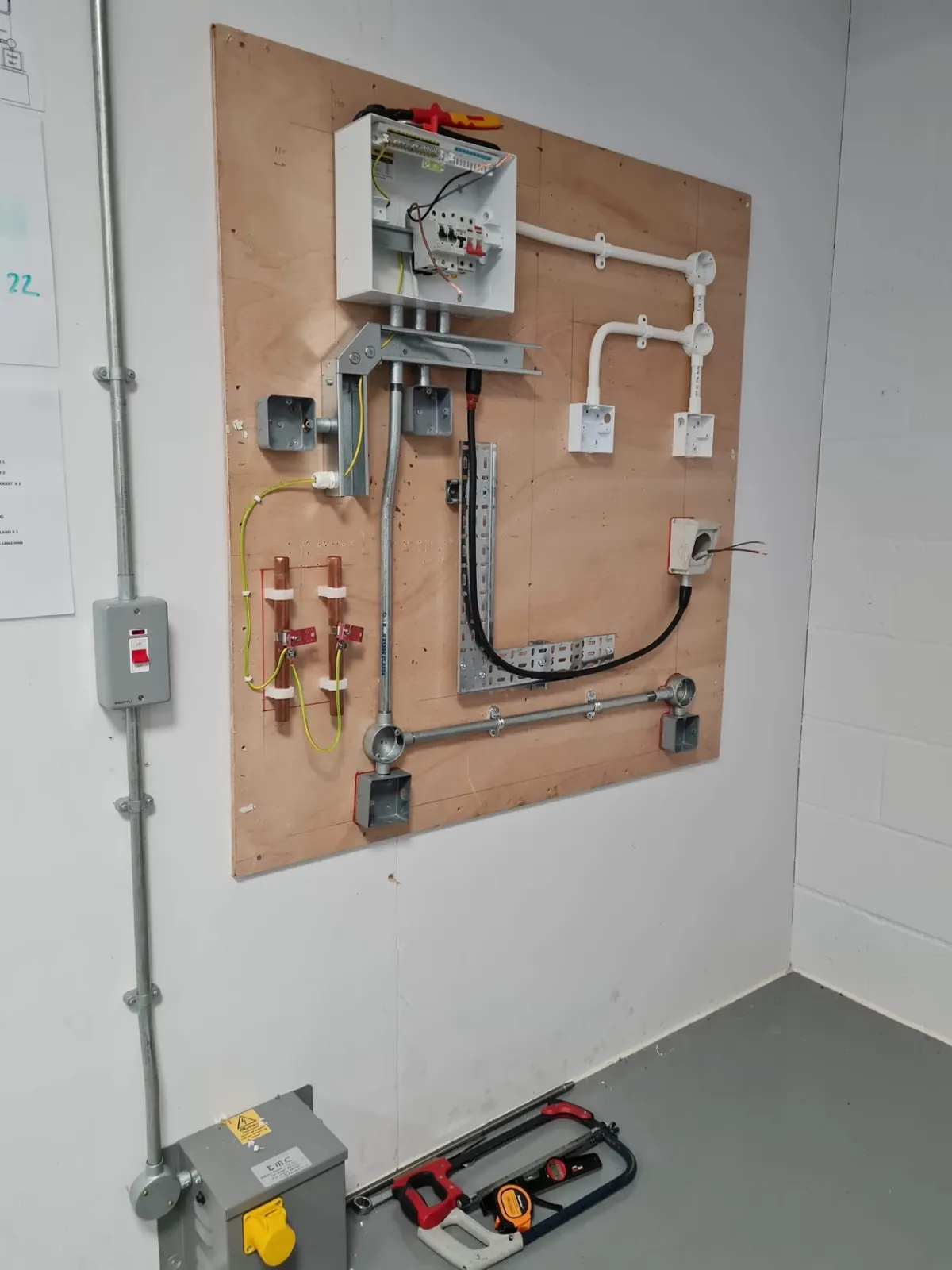
What is an electrical apprenticeship?
An electrical apprenticeship is a structured route where you learn the trade while working for an employer. You are an employee rather than simply a student: you work, get paid and complete training alongside your practical experience.
The important difference is that your learning is connected to real electrical work. You develop the technical knowledge behind the job while also building the practical competence needed to work safely and correctly in the industry.
Electrical apprentices may work across homes, commercial buildings and industrial environments depending on their employer. The work can include installation, maintenance, inspection and testing, fault diagnosis and commissioning.
You are learning a job, not just studying a subject
The aim is to finish with the knowledge and practical competence required for the occupation. That is why workplace experience is such an important part of the route.
How does an electrical apprenticeship work?
The exact programme depends on where you live in the UK and the apprenticeship you join, but the basic idea is similar: your employer and training provider work together so that employment, technical learning and practical development happen alongside each other.
Employer
You work in the industry, earn a wage and build experience carrying out electrical work under the appropriate supervision.
Training provider
A college or training provider delivers the technical part of the programme and supports your progress through the apprenticeship.
Practical competence
You build evidence that you can apply what you have learned in real working conditions rather than only passing classroom tests.
Final assessment
Your apprenticeship includes assessment to confirm that you have reached the required occupational standard. The exact assessment depends on the apprenticeship framework you are following.
Apprenticeships differ across the UK
England, Scotland, Wales and Northern Ireland run their own apprenticeship systems. For example, England currently uses the Level 3 Installation and Maintenance Electrician standard, while Scotland uses an Electrical Installation Modern Apprenticeship. Always check the route that applies where you live and work.
Electrical apprenticeship vs college
This is where a lot of people get confused. Going to college and starting an apprenticeship can both involve electrical training, but they are not automatically the same route.
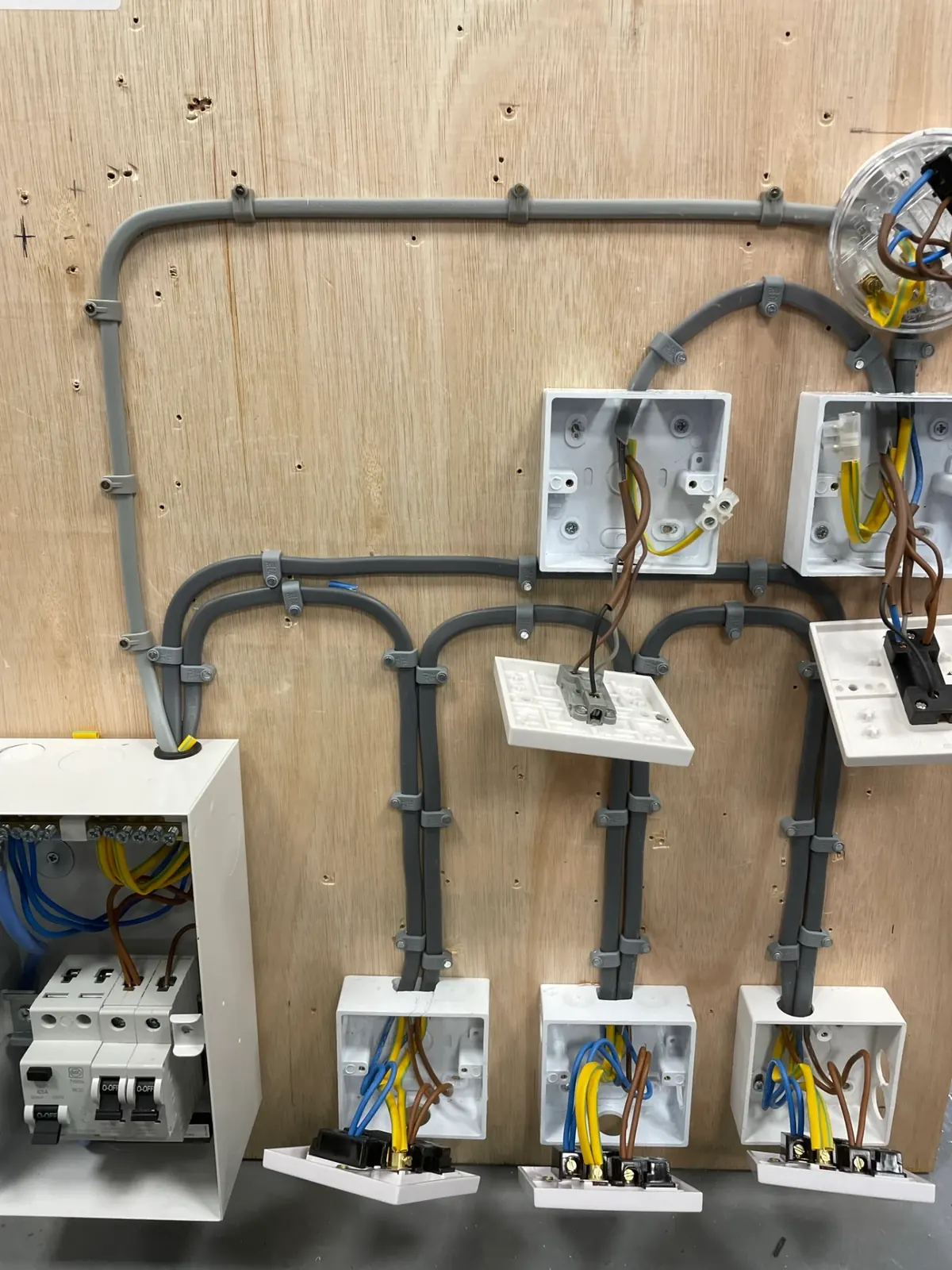
Is college still a good route?
Yes. College can be a very useful starting point, particularly if you cannot secure an apprenticeship immediately. It can help you learn electrical theory, regulations and practical workshop skills while you continue looking for industry experience.
The mistake is assuming that every electrical college course has the same outcome. Before paying for training, check exactly what qualification you will receive and what you would still need afterwards to reach the level of occupational competence expected of a qualified electrician.
Do not choose a course purely because it promises a quick route into electrical work.
Check the qualification, the practical workplace requirements and the route it leads to before paying course fees.
Do electrical apprentices get paid and how long does it take?
Apprentice pay
Yes. An apprentice is an employee and receives a wage. The amount depends on the employer, your age and where you are in the apprenticeship.
From 1 April 2026, the UK apprentice minimum rate is £8.00 per hour. That rate applies if you are under 19, or if you are aged 19 or over and still in the first year of your apprenticeship.
Once you are 19 or over and have completed the first year, you are entitled to the National Minimum Wage rate for your age. Employers can, and often do, pay more than the legal minimum.
How long it takes
There is no single duration that applies to every electrical apprenticeship throughout the UK.
In England, the current Installation and Maintenance Electrician Level 3 standard lists a typical training duration of 54 months, followed by its assessment period.
Scotland's Electrical Installation Modern Apprenticeship is currently described as taking around three to five years. Other apprenticeship systems have their own arrangements.
Think in years, not weeks
Becoming a competent electrician requires time on the tools as well as technical training. A longer structured route is not wasted time: the workplace experience is part of what you are there to gain.
What will you learn during an electrical apprenticeship?
You are training to carry out electrical work safely and to the required standard, so the programme covers much more than wiring sockets and lights.
Installation
- Electrical installation methods
- Cables and containment
- Equipment and accessories
- Reading drawings and specifications
Safe working
- Electrical safety
- Safe isolation
- Risk assessment
- Safe working practices
Technical knowledge
- BS 7671 requirements
- Electrical principles
- Inspection and testing
- Fault diagnosis
A recognised apprenticeship combines this knowledge with evidence that you can actually apply it in the workplace. That practical competence is a major difference between completing the full industry route and simply collecting standalone certificates.
What if you can't find an electrical apprenticeship?
This is common. Electrical apprenticeships can attract a lot of applicants, and the number of vacancies in your area will depend on which employers are recruiting at the time.
Not getting an apprenticeship immediately does not mean you have to give up on becoming an electrician.
Keep applying to employers
Do not rely on one large annual recruitment campaign. Smaller electrical contractors may recruit at different times during the year.
Consider college while you search
A suitable electrical course can help you develop useful knowledge and practical workshop skills while you continue looking for an employer. Check the qualification and its progression route before enrolling.
Get relevant experience where possible
Employers often value reliability, site awareness and a genuine interest in the trade. Relevant construction or electrical experience can strengthen future applications, provided you are only carrying out work appropriate to your competence and supervision.
Already have substantial electrical experience?
If you have been working in the industry for years without completing the normal apprenticeship route, starting again as a new apprentice may not always be appropriate. Eligible workers may instead be able to use an Experienced Worker Assessment route.
How to find an electrical apprenticeship
Treat finding an apprenticeship like finding a job, because that is essentially what you are doing. You need an employer prepared to employ and train you.
Search official apprenticeship vacancies
Use the official apprenticeship service for your part of the UK and search regularly rather than checking once.
Approach electrical contractors
Smaller employers may not always run large recruitment campaigns. A concise CV and a professional introduction can put you on their radar.
Speak to colleges and training providers
Providers often work directly with local electrical employers and may know which businesses regularly take on apprentices.
Make your application relevant
Explain why you want the trade, show reliability and include relevant practical, construction or technical experience rather than sending an identical generic application to every company.
What happens after your electrical apprenticeship?
Completing a recognised apprenticeship gives you a strong foundation for working as an electrician, but your exact next step depends on the occupation, qualification and card route you have completed.
Complete the apprenticeship
Make sure all qualification and final assessment requirements have been completed and processed.
Check your ECS route
A recognised Level 3 apprenticeship is one of the main routes towards meeting the qualification requirements for the relevant ECS Gold Card.
Keep developing
Experience can lead into inspection and testing, supervision, design, project management and other electrical specialisms later in your career.
Frequently asked questions
Do electrical apprentices get paid?+
Yes. An apprentice is an employee and must be paid for the work and training hours that form part of the apprenticeship. The amount varies between employers, but minimum wage rules still apply.
How much is the apprentice minimum wage in 2026?+
From 1 April 2026 the UK apprentice minimum rate is £8.00 per hour. It applies to apprentices under 19 and to apprentices aged 19 or over who are in the first year of their apprenticeship. Apprentices aged 19 or over who have completed their first year are entitled to the minimum wage for their age.
How long does an electrical apprenticeship take?+
It depends on where in the UK you train and the apprenticeship framework you follow. In England, the current Level 3 Installation and Maintenance Electrician apprenticeship has a typical training duration of 54 months before its assessment period. Other UK nations use their own apprenticeship frameworks.
Is an electrical apprenticeship better than going to college?+
Neither option is automatically better for everybody. An apprenticeship gives you employment, pay, structured training and workplace experience together. College can be a useful way to start learning electrical theory and practical skills if you have not yet found an employer, but completing a standalone college course does not necessarily make you a fully qualified electrician.
Can I become an electrician by paying for a college course?+
A college course can form part of your training, but you need to check exactly where that course leads. Industry recognition normally requires both technical knowledge and evidence of occupational competence in real working conditions. Do not assume that completing a classroom-based course alone gives you the same outcome as a recognised apprenticeship or competency-based route.
Am I too old to become an electrical apprentice?+
There is no general rule saying apprenticeships are only for school leavers. Adult apprenticeships are common. Eligibility and funding arrangements differ across the UK, and employers can set their own recruitment requirements.
Do I need GCSEs to get an electrical apprenticeship?+
Entry requirements vary between employers and apprenticeship programmes. Many employers look for a reasonable standard of maths and English because electrical training involves calculations, technical information and written documentation. Always check the requirements on the vacancy you are applying for.
Will completing an apprenticeship give me an ECS Gold Card?+
A recognised Level 3 apprenticeship is one of the main routes towards meeting the qualification requirements for an ECS Gold Card. You still need to meet the ECS requirements for the specific card and occupation you are applying for.
Source and accuracy
Apprenticeship standards, pay rates and qualification requirements can change. This guide was reviewed against current information from Skills England, GOV.UK, Apprenticeships.scot and the Electrotechnical Certification Scheme on 13 August 2026. Always check the current apprenticeship and training requirements that apply where you live.