
Industry Advice
The Complete ECS Card Guide
New to ECS cards? This guide explains what the cards mean, the main card types you are likely to see, how the Gold Card route works, what JIB grading means, and what to expect when applying or renewing.
Quick Facts
Scheme
ECS
Typical validity
3 years
First card
~4 weeks
Qualified route
Gold Card
Digital card
MyECS App
Worth knowing: an ECS card is not a qualification by itself. It shows the occupation, training or qualification level you have proved to ECS.
On this page
What is an ECS Card?
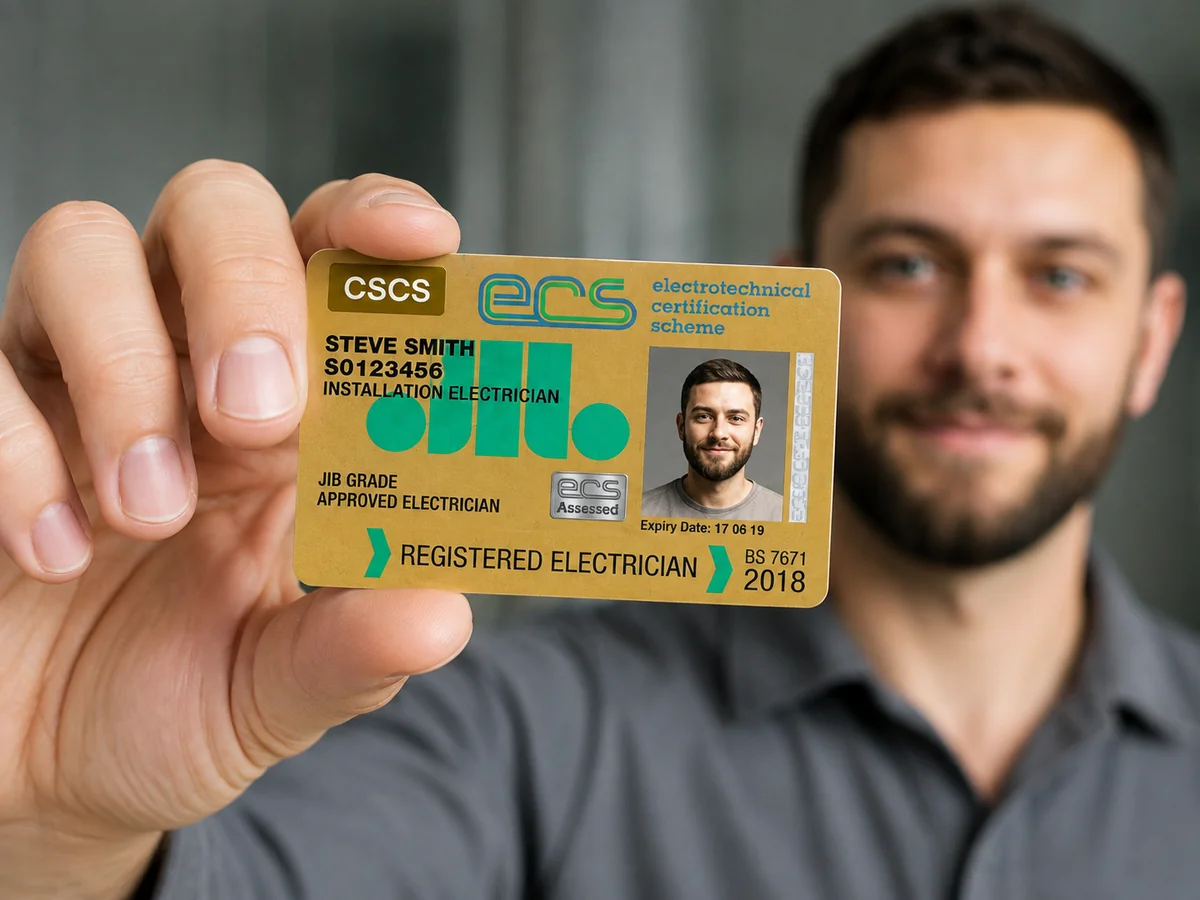
ECS stands for the Electrotechnical Certification Scheme. An ECS card helps employers and sites check who you are and what electrical role, training or qualification level you have proved. Different cards exist for apprentices, labourers, trainees and qualified electrical workers.
In England, Wales and Northern Ireland the scheme is run by the Joint Industry Board (JIB). Scotland uses the Scottish JIB system, so some card names and routes can be different there.
What appears on your card
ECS Card Types
ECS has a lot of card types, but most people entering or progressing through electrical installation work only need to understand a few main groups first. The exact card depends on what you do now and what qualifications or training you already have.
Apprentices and trainees
Apprentice
For people completing an electrical apprenticeship. You work on site while you train, but the work you do is supervised.
Pre-apprentice
A short-term card used before some people move onto a full apprentice registration. It is not a qualified electrician card and it cannot be renewed.
Trainee Electrician
For people on a recognised training route towards an ECS Gold Card who are not following the standard apprenticeship route. Work is still carried out under supervision.
Industry Placement
For electrical students completing an organised work placement, including some T Level and degree placements. The training provider normally handles the application.
Gold cards — qualified occupations
Installation Electrician
For qualified electricians who install and maintain electrical systems and can work without supervision. This is one of the common ECS Gold Cards people work towards.
Maintenance Electrician
For qualified electricians who maintain electrical systems, equipment and plant. The exact qualification requirements are set by ECS and include the recognised electrical qualification route for this occupation.
Domestic Electrician
For qualified electricians whose recognised route is specifically for electrical work in homes and other domestic settings.
Electrical Fitter
For qualified workers who assemble, install and maintain certain electrical equipment and systems. It is a different occupation from Installation Electrician.
Wireman / Panel Builder
For people who build and wire electrical panels or control equipment. This is a specialist occupation rather than the normal installation electrician route.
Other electrical occupations
ECS also has cards for specialist electrical occupations. If your job is more specialised, use the official ECS card finder rather than assuming you need the standard Installation Electrician card.
Site access and stepping-stone cards
Electrical Labourer
For people helping electricians with basic site work under supervision. It is not the same as being a qualified electrician and it does not let you carry out electrician work on your own.
Experienced Worker (brown stripe)
For some people who already have Level 3 classroom or technical training but have not yet completed the full practical qualification route needed for a Gold Card.
Experienced Worker (gold stripe)
For experienced electrical workers who are registered with a training provider to complete an Experienced Worker Assessment and work towards qualified status.
Routes to an ECS Gold Card
A Gold Card is not something you get just because you have worked in the industry for a certain number of years. You need to meet the recognised qualification requirements for the electrical occupation shown on the card. For the full qualification route, read our dedicated ECS Gold Card guide.
Route 1
Qualified to NVQ Level 3 standard
If you have already completed the recognised Level 3 route for your occupation, you may be able to apply for the appropriate Gold Card once the other ECS requirements are met.
Route 2
Experienced Worker Assessment
If you have worked in the trade for years but never completed the normal qualification route, an Experienced Worker Assessment may let you prove the skills you already have and work towards the recognised Level 3 standard.
Route 3
Neither route yet? Apply and upgrade later
If you are not at Gold Card level yet, use the ECS card that matches where you are now. You can apply to upgrade later when you have completed the qualifications and assessments needed for the card you want.
Where do the NVQ and AM2 fit in? For many electricians, the route to qualified status includes a recognised Level 3 qualification and the relevant practical assessment. The exact route depends on whether you are an apprentice, already working in the trade or using an Experienced Worker route.
JIB Grading Explained
JIB grading is a separate way of showing an electrician's recognised grade within the JIB system.
Your ECS occupation shows the type of electrical work you have qualified for. Your JIB grade shows your recognised level within the JIB grading system. If you are new to the trade, you do not need to memorise every grade — higher grades normally mean more experience, responsibility and extra qualifications.
| Grade | Typical requirements |
|---|---|
| Core | The standard JIB electrician grade. You normally need the recognised electrical qualification route for the occupation being graded. |
| Approved | A higher grade for electricians who already meet the Electrician grade and then gain the extra experience, responsibility and qualifications required by JIB. |
| Technician | A higher technical grade requiring further experience and higher-level qualifications. It is not something most people need when they are first becoming qualified. |
Which occupations can be graded
Not every ECS card uses JIB grading. It mainly applies to particular electrical occupations. If you are on an apprentice, labourer or specialist route, do not assume the same grading rules apply.
What a grade means for you
Some employers and JIB jobs use grades when deciding the level of work, responsibility and pay attached to a role. If you work for a JIB member company, your employer may also need to endorse the grade application.
How to Apply for Your First ECS Card
Before you pay for an application, check the exact card you qualify for and have your certificates or other evidence ready. Applications are normally handled through MyECS.
Register for a MyECS account
Applications are made online through MyECS, and you track your progress from there.
Check the qualification requirements
Check the exact card requirements first, then upload clear copies or photos of the qualifications ECS asks for.
Meet the health and safety requirement
Most applicants need the ECS Health, Safety and Environmental Assessment unless an accepted exemption applies to their card.
Validity and Renewal
Many ECS cards are valid for three years, but some training and Experienced Worker cards last for less time. Your MyECS account shows the expiry date for your own card and the current renewal requirements.
What you need to renew
Changes from 2027
New ECS revalidation requirements are coming
ECS has announced new revalidation requirements from 2027 for some card renewals. The exact requirement depends on the occupation, so check the latest information in MyECS when your renewal is due.
Timescales and Costs
Processing time depends on whether ECS has everything it needs from you. Fees also vary by application and card type, so check the current ECS fee information before paying.
~4 weeks
First card
Normally issued approximately four weeks after ECS receives a complete application with all supporting evidence, documentation and payment.
2–3 weeks
Renewal
The approximate turnaround when renewing an existing card through MyECS. Missing items or checks can extend either timescale.
Varies
Cost
The cost depends on the card type. ECS publishes current fees in its “ECS Card Payment Details” document — check the official ECS website for the fee that applies to you.
ECS Registered Electrician
Registered Electrician is an extra ECS status for eligible qualified electricians. It sits alongside your ECS card rather than replacing it.
If you meet the current ECS requirements, the status can be shown with your card. Because the rules can change, check the current Registered Electrician criteria when you apply or renew.
Registered Electrician
Criteria published by ECS
How ECS Cards Are Checked on Site
Employers, contractors and site teams can check ECS cards digitally. This means they do not have to rely on a photo of a card or an old screenshot.
Virtual card
The MyECS App gives cardholders a digital version of their ECS card and a QR code that can be used for checking.
ECS Check
ECS Check lets employers, contractors and other organisations verify a cardholder's current ECS status digitally.
CSCS Smart Check
ECS cards can also be checked through the wider CSCS Smart Check system used across construction.
Frequently Asked Questions
How long is an ECS card valid for?
It depends on the card type. ECS states a card will typically be valid for three years, though some card types are shorter — Trainee cards are valid for 24 months, and Experienced Worker and Provisional graded cards for 18 months.
How quickly will I get my card?
ECS states that a first card is normally issued approximately four weeks after they receive a complete application with all supporting evidence, documentation and payment. Renewals through MyECS are approximately two to three weeks. Missing items can make it take longer.
How much does an ECS card cost?
The cost depends on the card type. ECS publishes current fees in its "ECS Card Payment Details" document rather than as a single headline price, so check the official ECS website for the fee that applies to your application.
When should I renew?
Renewals are made through MyECS. Before renewing, make sure you meet the current requirements for your card and have any qualification evidence or health and safety requirements ready.
How long is the health and safety assessment valid for?
You must make your ECS card application within two years of successfully passing the ECS Health, Safety and Environmental Awareness Assessment.
What if I trained outside the UK?
ECS states you can apply for a card if you trained outside the UK and meet certain criteria, and that you must demonstrate the same qualification standard as UK-trained electricians. Check the non-UK qualifications section of the official ECS website.
Do I have to work for a JIB member company to hold a JIB grade?
No. You do not have to be employed by a JIB member to apply for a JIB grade if you meet the criteria. If you do work for a JIB member company, you need your employer’s endorsement before applying.
Can someone check my card on site?
Yes. ECS cardholders have a virtual card in the MyECS App with a dynamic QR code, and cards can be verified through the ECS Check systems or the CSCS Smart Check App.
Source and accuracy
This guide summarises information published on the official ECS website and was last reviewed on 12 August 2026. Card types, qualification requirements, fees, processing times and eligibility criteria can change.
Visit the official ECS websiteElectrical Guides
Continue learning
Careers
How to Become an Electrician in the UK
Understand the main routes into the electrical industry and how to work towards becoming qualified.
Qualifications
NVQ Level 3 Electrical Guide
Understand how Level 3 works, what evidence you need and how the route towards qualification works.
Regulations
18th Edition Guide
A plain-English guide to the Wiring Regulations, who needs them and where they fit into an electrical career.
Ready to look for electrical work?
Browse current electrical jobs from employers and recruiters across the UK, or create your free profile.